

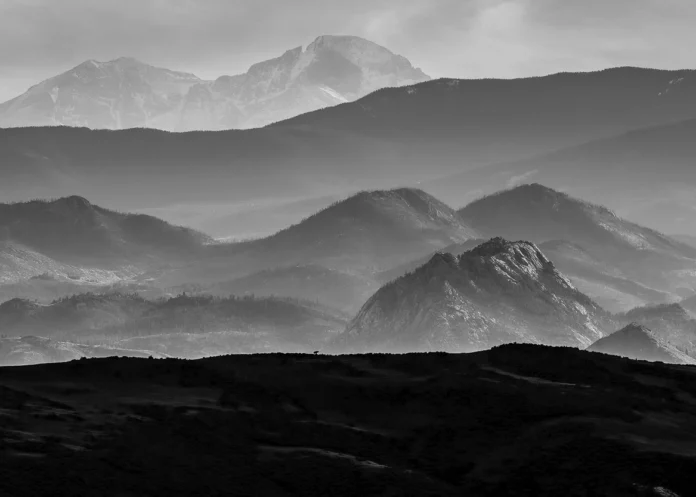
When I arrived in Fort Collins, I was struck by the atmosphere and culture of this northern Colorado city — its haunts, its people, the college, and a new life that was literally thrust upon me. Where I came from, there was nothing like it, though some parts reminded me of my home in northern Texas near Witcha Falls. Being the explorer I am, I began to wander the mountains and the open prairie of the Front Range, always in search of another photograph, another story, and a sense of belonging in new lands. I roamed the backroads and dirt roads, always looking for the next adventure, and one day I came across an area that took me back to why I picked up a camera in the first place.
One morning, studying a map of the area, I noticed a place in fine print: Soapstone Prairie Natural Area, north of Fort Collins, about three miles from the Wyoming state line and west of Interstate 25. It was off the beaten path, but good roads led to it, so I decided to load up and head out to see it for myself. What I found was an open prairie of rolling hills and the remnants of a streambed hugging the road — long dry, for what seemed like millennia. As it turns out, I was right. I had found myself in the middle of history, controversy, and discovery — perfect for anyone looking for a new adventure.
North of Fort Collins, the land rolls like a frozen sea. Sage freckles the draws; pronghorn cut dun silhouettes against a big, unblinking sky. You can stand on a ridge in Soapstone Prairie Natural Area, feel the gusts tug at your hat brim, and look out across bluffs that barely register as relief until a shadow moves — a hawk kiting, a coyote sliding between yucca clumps, or a small herd of conservation bison throwing dark commas on the grass. This is modern northern Colorado shortgrass country: austere, honest, and still raw enough to hear your own pulse. Beneath your boots, though, lies a campsite that once held families who lived by stone, bone, sinew, and nerve during the last gasp of the Ice Age. They left needles as fine as thorns, fluted spear points thin as your thumbnail, ochre stains, and the kind of evidence that can pry open minds: human weaponry lodged in ancient bison bone.
This place is the Lindenmeier Site — the most extensive Folsom-age campsite yet found — and it matters because it helped answer a question American science argued about for a century: How long have people lived in North America? At Lindenmeier, the answer wasn’t an abstract date. It was a life lived on a wintering ground, around hearths, under hard weather, with children and elders, and with the tools and trash that make a camp feel like a home. It was also, crucially, a bone with a point in it — a “smoking gun” that forced powerful skeptics to concede that Ice Age people were here long before anyone wanted to admit.
Archaeologists place Lindenmeier squarely in the Folsom tradition — a Paleoindian culture known for elegant, fluted spearpoints and a mobile, big-game hunting life that stretched across the High Plains near the end of the Pleistocene. Unlike the many small kill-butchery locales scattered across the Plains, Lindenmeier is a large residential campsite: a half-mile-long complex of activity areas where toolmaking, hide-working, cooking, ornament production, and winter living all leave their mark. That scope is rare. It gives archaeologists a fuller look at daily life rather than a single dramatic hunt frozen in time. Bone needles (with actual eyes), shell and bone beads, scrapers, gravers, drills, ochre — the diversity speaks to a place where families parked themselves, repaired gear, and waited out the season together.
The scientific payoff is big. With so many contexts in one defensible arroyo, researchers could correlate stone technology, bone tools, camp organization, and paleo-environmental data to a single population. In the 1930s, Frank H. H. Roberts Jr. of the Smithsonian’s Bureau of American Ethnology led multi-year excavations here — a model of systematic fieldwork for its time — and later syntheses placed Lindenmeier at roughly ~12,3oo–12,9oo calendar years before present, right at the late-glacial transition when climates were volatile and megafauna still roamed. That’s not just trivia; it ties a real community to real climate turbulence on the Plains.
The Embedded-Point Moment
If you’ve spent time around archaeology, you know the old rule: extraordinary claims require extraordinary proof. In early 20th-century American anthropology, the “extraordinary claim” was that humans had been in North America during the Ice Age — not just for a few thousand years. The establishment line, steered heavily by influential Smithsonian anthropologists like Aleš Hrdlička and William Henry Holmes, was uncompromising: any supposed association of human artifacts with extinct megafauna was coincidence, contamination, or wishful thinking.
That wall began to crack in 1927 at the Folsom type site in New Mexico, where crews working for Jesse Figgins of the Colorado Museum of Natural History exposed a Folsom point between the ribs of an extinct bison (Bison antiquus). Figgins, weary of being dismissed, halted work and summoned outside authorities to witness the find in place. The point-in-rib association — the artifact caught in the carcass — was the kind of smoking gun the skeptics demanded. It forced a reluctant establishment to concede Ice Age antiquity for North American humans. But the resistance had been deep and public, and it didn’t evaporate overnight.
Eight years later, in 1935 at Lindenmeier, crew member Loren Eiseley uncovered an ancient Bison antiquus vertebra with a human-made spearpoint embedded in it. If Folsom was the first hard proof that people were here during the late Pleistocene, Lindenmeier delivered the reinforcement: the same human-megafauna association, now at a large residential site with an embarrassment of context. Eiseley’s find mattered because it showed that Folsom wasn’t a fluke — these were living, hunting communities whose weapons were literally lodged in the bones of extinct animals on Plains wintering grounds.
So was the Smithsonian “resistant” to the Lindenmeier evidence? Short answer: the Smithsonian had been a center of resistance to deep antiquity claims for decades — and the culture of skepticism lingered — but by Roberts’s tenure and the Lindenmeier seasons (1934–1940), the institution itself was also the team digging, documenting, and ultimately publishing the evidence. In other words, Lindenmeier helped flip the narrative from within. Roberts’ reports on the site, including his 1935 and 1936 publications, formalized the Folsom complex and anchored the profession’s acceptance of late-Ice Age lifeways on the High Plains. The backstory of earlier Smithsonian resistance matters, because it explains why in-bone associations were treated as courtroom-grade exhibits. Lindenmeier delivered them — and delivered them with the Smithsonian’s own archaeologist holding the pen.
What They Left — And What It Tells Us
Walk through the collections and you can reconstruct a camp that breathes. The fluted points — those delicate Folsom blades with a central groove struck from both faces — are technological feats, optimized for hafting and penetration. The gravers — little stone tools with a fine spur — speak to making the very eye of those bone needles, an innovation that says “sewing fitted clothing,” which says “we live here in winter and don’t freeze.” The needles themselves are the quiet heroes of the kit: slim, polished, and drilled — evidence of tailored hides and the domestic skills that keep kids warm and hunters moving. Red ochre shows up too, a hint of ritual or body/gear treatment. Taken together, Lindenmeier reads like a whole society’s toolbox, not just a battlefield’s litter.
Faunal remains list the neighbors: Bison antiquus foremost, but also smaller game and the broader Pleistocene cast that still grazed and prowled the high plains. Roberts’ work and later syntheses slot Lindenmeier near the threshold when climate tipped toward the Holocene, ecosystems reshuffled, and the megafauna blinked out. That timing matters to every modern conversation about climate, wildlife, and human adaptation: these families were negotiating a rapidly changing world with skill, mobility, and knowledge — a playbook we ought to recognize.
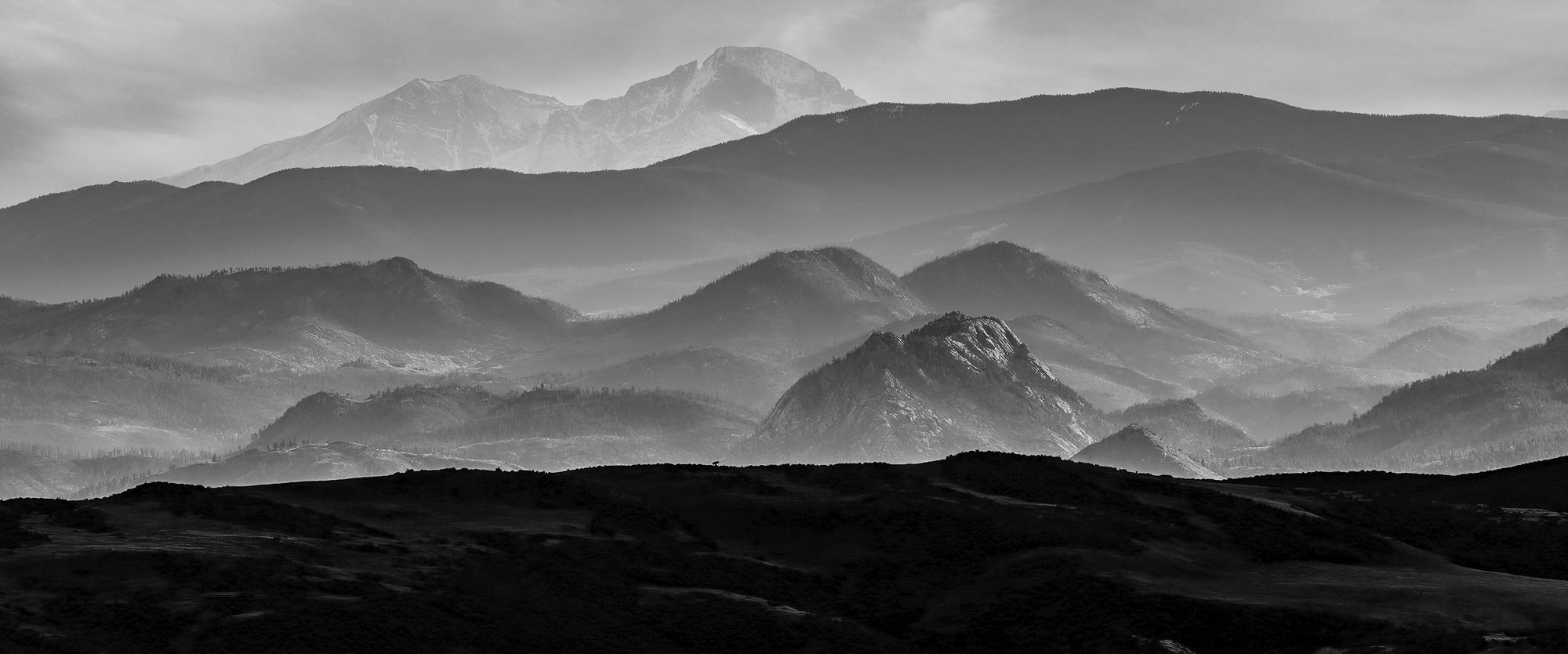
The Land Then: Winter Light, Wind, and Big Animals
Picture late-Ice-Age northern Colorado in winter. The continental ice sheets are retreating far to the north, but cold still owns the nights. The shortgrass prairie is a leaner, more open mosaic than most modern visitors expect: rolling steppe, frost-brittle bunchgrasses, cushion plants crouched in wind-scoured soils, and the long, fingered shadows of outcrops and arroyos. Snow drifts hard along the lee of low ridges, then vanishes under chinook winds. Bison antiquus move in wary clusters — bigger and longer-horned than modern bison, deep-chested, built for distance. Out beyond the horizon, mammoth and camel hold on in other basins; closer in, wolves track the herds, and golden eagles tilt over the draws. Water gathers in frozen seeps and ephemeral wetlands; a day’s walk can mean the difference between forage and famine. That’s the canvas the Folsom people painted their lives on.
The camp sits in an arroyo — a sheltered cut in the land that breaks the wind and offers visibility for miles. Hearths pop. Children chase each other around piles of debitage. A woman leans over a hide, pushing a needle eye through a seam; a man seated with his knees up flicks off wafer-thin flakes, turning a roughed-out biface toward a flute-ready blank. Meat hangs hardening in the cold. Someone grinds red ochre. Later, hunters will test a fresh point on a green willow shaft, flexing sinew bindings so they sing. Before dawn, they’ll go. And sometime later, a spear will meet ribs, and bone will remember.
The Land Now: A Prairie With Memory
Fast-forward to Soapstone Prairie Natural Area, a 28-square-mile preserve opened to the public in 2009 after the City of Fort Collins bought and protected the land. You can hike for miles here on trails that climb to views where Colorado lies to your south and Wyoming to your north. The country is still shortgrass prairie — austere and stunning — with islands of sage, greasewood, and sand blowouts. Prairie dogs chatter over their low towns; hawks, eagles, and burrowing owls work the air. On certain days, a conservation bison herd — animals carrying Yellowstone genetics — moves across the pastures shared with Larimer County’s Red Mountain Open Space. It’s not the Ice Age, but the shape and the wind feel right, and that matters.
For a photographer, the place is an honest lightbox: long shadows, big sky, and a horizon without gossip. For anyone tuned to deep time, it’s a classroom. Interpretive panels don’t over-sell; they nudge. You stand near the arroyo that once held a wintering camp, and the mind overlays heat from old hearths onto the bite of the wind. The city keeps the pressure off: the area’s closed in mid-winter months, and the rules (no dogs, dawn-to-dusk access) protect wildlife and the cultural record. It’s as close to a working memory as prairie gets.
How the Debate Shifted — From Denial to Documentation
It’s important to untangle two threads people often knot together: (1) the institutional resistance to Ice Age antiquity of humans in North America, and (2) the evidence that finally cracked it.
Thread one: By the early 1900s, the Smithsonian’s Hrdlička and others were the loudest voices rejecting any evidence that put humans deep into Pleistocene time. They weren’t cartoon villains; they were defending standards in a field plagued by weak claims. But the skepticism hardened into dogma. Everything was “too recent,” “redeposited,” or “misinterpreted.”
Thread two: The Folsom 1927 point-in-ribs discovery forced a public pivot. Figgins orchestrated a masterclass in verification — summoning outside luminaries to witness the point in place, then publishing carefully. It didn’t convert everyone instantly, but it changed the center of gravity. Once that first breach existed, the profession looked with new eyes at other candidates. Enter Lindenmeier, with Roberts’s multi-season, Smithsonian-led excavations and Eiseley’s 1935 point-in-bison-bone association. The institution that had harbored the staunchest skeptics now published the very evidence that made deep antiquity undeniable. The resistance didn’t vanish, but it no longer set the default. From there, the discipline was able to refine the Folsom age range, integrate radiocarbon dating as it matured, and place camps like Lindenmeier in a late-glacial frame we still use.
Fieldcraft and Craftsmanship
Let’s linger on the craft because it’s easy to romanticize the hunt and miss the genius of maintenance. Fluting a Folsom point — striking that long channel scar down each face — is a high-risk move. Do it wrong and you snap a piece you’ve invested hours into. Do it right and you create a geometry that seats in a foreshaft, cuts well, and can be re-sharpened. The gravers at Lindenmeier, with their tiny spurs, are specialized: think punching and carving the eyes in bone needles. That’s patience. That’s control. That’s hands trained by necessity and honed by pride.
Bone needles, in turn, speak to complex clothing systems — layered, tailored, repairable. Winter camps aren’t possible without them. It’s the domestic mirror of the spear point: both are edge technologies, both keep people alive, and both require extremely fine motor skills. Lindenmeier gives us both in abundance.
A Day in Camp (Then)
You’re up before first light because wind owns the afternoon. Two hunters notch points into foreshafts by firelight; a third checks the bindings on a child’s moccasin. A woman warms her hands over the coals and threads bone through hide, hazy breath drifting under the shelter’s edge. Someone crushes red stone into a dish and mixes it with fat. Out beyond the arroyo, bison stand like stumps on the snow-spattered slope. The air tastes like iron.
On the way out, there’s a last ritual you don’t narrate to outsiders. A chant, a gesture, a touch of pigment where wood meets sinew. The hunters move single-file into the wind. Back in camp, scraping begins — there are hides to clean, straps to cut, a broken drill to rehaft. Children are told to stay away from the steep cutbank where the ground gives unexpectedly. By late morning the wind lifts, and the world becomes a bright, abrasive shimmer. A black shape spirals; the older woman clicks her tongue — eagle — and returns to an incised bone ornament she’s been working around the cookfire, a spiral of lines no one needs but everyone loves.
By dark, the hunters are back, quiet but smiling, carrying what they can, having marked the rest. The youngest has blood on his sleeve; he doesn’t wipe it. There’s meat on the rack before the moon climbs; fat pops into the fire. Someone tells a story about a time when the world was colder and a man drilled a hole through a needle’s eye without splitting it. Everyone laughs like it’s impossible, and everyone knows it isn’t.
A Day on the Prairie (Now)
You park at dawn because Soapstone is best when the light’s low and the snakes are still cold. The trail eases across 18–28 square miles of protected shortgrass and sage. Golden eagles patrol the breaks. A pronghorn threads a fence where the wires are clipped for wildlife passage. You read a panel about Lindenmeier, and it doesn’t try to do your thinking for you. You crest a modest rise and the wind lands a hand on your shoulder, same as it did 12,000 years ago.
If you’re lucky, you see the bison — the conservation herd with Yellowstone genetics — and you think about continuity and repair. If you keep your eyes soft, you notice that the arroyo still catches the wind differently, and you make a mental map of where you’d pitch a shelter. No dogs. Dawn to dusk. It’s a working prairie, not a petting zoo. You leave it without trash and without souvenirs. The souvenir you keep is mental: an honest landscape where the ground and the record align.
Controversies
Let’s lay the disputes on the table, because clarity beats romance.
- “Point-in-bone” skepticism: Before Folsom (1927), the default institutional position — loudly voiced by Smithsonian figures — was that alleged associations between human artifacts and extinct fauna were mistaken. The Folsom rib-cage point (New Mexico) was the decisive counterexample. At Lindenmeier (1935), Eiseley’s bison vertebra with an embedded point reaffirmed the human-megafauna tie on Colorado ground. Both sites mattered: Folsom cracked the wall; Lindenmeier showed the breach wasn’t a one-off.
- “Smithsonian resistance” versus “Smithsonian authorship”: It sounds contradictory, but both are true across time. Earlier Smithsonian leaders resisted Pleistocene-age claims; a later Smithsonian archaeologist (Roberts) led the multi-season excavations at Lindenmeier and published them, building the modern Folsom framework. The institution that once dug in its heels ended up documenting the evidence that changed the consensus. That’s not hypocrisy; that’s how science corrects itself — slowly, and then all at once when the data overwhelm habit.
- Age estimates and context: Lindenmeier’s Folsom component sits near ~12.3–12.9 ka in current models, with earlier pre-radiocarbon estimates refined by later dating. It remains the largest, best-documented Folsom residential campsite, invaluable for seeing daily life, not just kills.
What Lindenmeier Teaches
You don’t need a PhD to read the message. Adaptation is a family business. These folks ran a tight system: elite projectile tech paired with quiet domestic tech; strategic wintering in wind-shadowed cuts; gear you can fix with what a single person can carry. They lived light and observant. When climate shifted, they moved and re-tuned. They stitched clothing to fit, they cached stone, they shared knowledge, and they taught kids how to keep a needle’s eye from splitting.
Lindenmeier also tells the conservation story straight: if you protect big, connected prairie, the land will host the old cast again — pronghorn in numbers, raptors, and bison that throw weight back into the grass. You don’t resurrect the Ice Age; you honor the shape of the place, and let it run. The modern Soapstone landscape — with closed winter seasons, no dogs, and a bison program built with science and partners — is a sign that northern Colorado understands that.
Stand there and let the wind pin your jacket. Think about a vertebra with a stone blade wedged in its tunnel — a simple, brutal, beautiful fact. Think about a museum director in 1927 who refused to be embarrassed again, who stopped the dig and called in outside experts to witness the point in place — determined that this time the evidence of Ice Age people would be undeniable.
References and research
- Fort Collins History Connection – The Lindenmeier Site
- Smithsonian Magazine – How the Folsom Point Changed Archaeology
- National Park Service – Fluted Points and the Folsom Tradition
- Colorado.com – Soapstone Prairie Natural Area
- City of Fort Collins – Soapstone Prairie Natural Area
- Colorado Encyclopedia – Lindenmeier Site
- University of Nebraska – Folsom Archaeology and the Great Plains
- National Museum of the American Indian – Early People in the Americas
- Denver Post – Soapstone Prairie Natural Area Opens to the Public