
Fifty years ago, tattoos in America carried a heavy social price. They were marks worn primarily by sailors, bikers, convicts, and those who lived life outside the “respectable” edges of society. In the eyes of many, they weren’t art — they were warning labels. Parents cautioned their kids that tattoos were for troublemakers. Employers saw them as unprofessional. In the polite company of middle America, they were something you kept covered up, if you had them at all.
Back then, a tattoo could brand you for life. It wasn’t just ink — it was identity, and not necessarily one that opened doors. As a child of the 1960s and 70s, you might have been told exactly that: tattoos were naughty, rebellious, or outright dangerous in their implications.
Fast-forward to today, and the picture could hardly be more different. In coffee shops, boardrooms, art galleries, and city parks, tattoos are everywhere — and on everyone. The soccer mom with a floral sleeve. The accountant with a Star Wars emblem on his calf. The young nurse with a watercolor-style bird peeking out from under her scrubs. What was once hidden is now proudly on display.
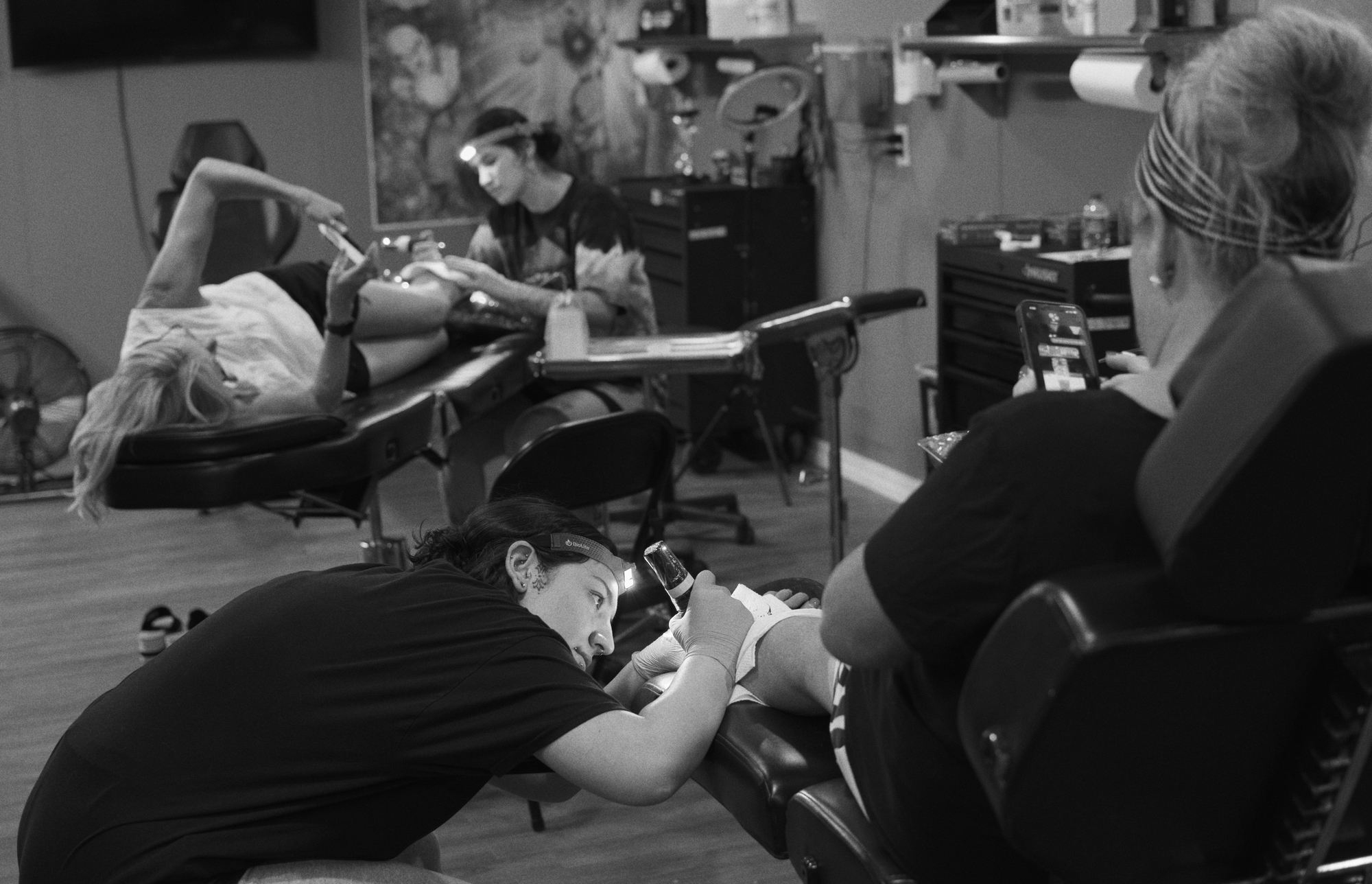
| THERAPY IN THE CHAIR
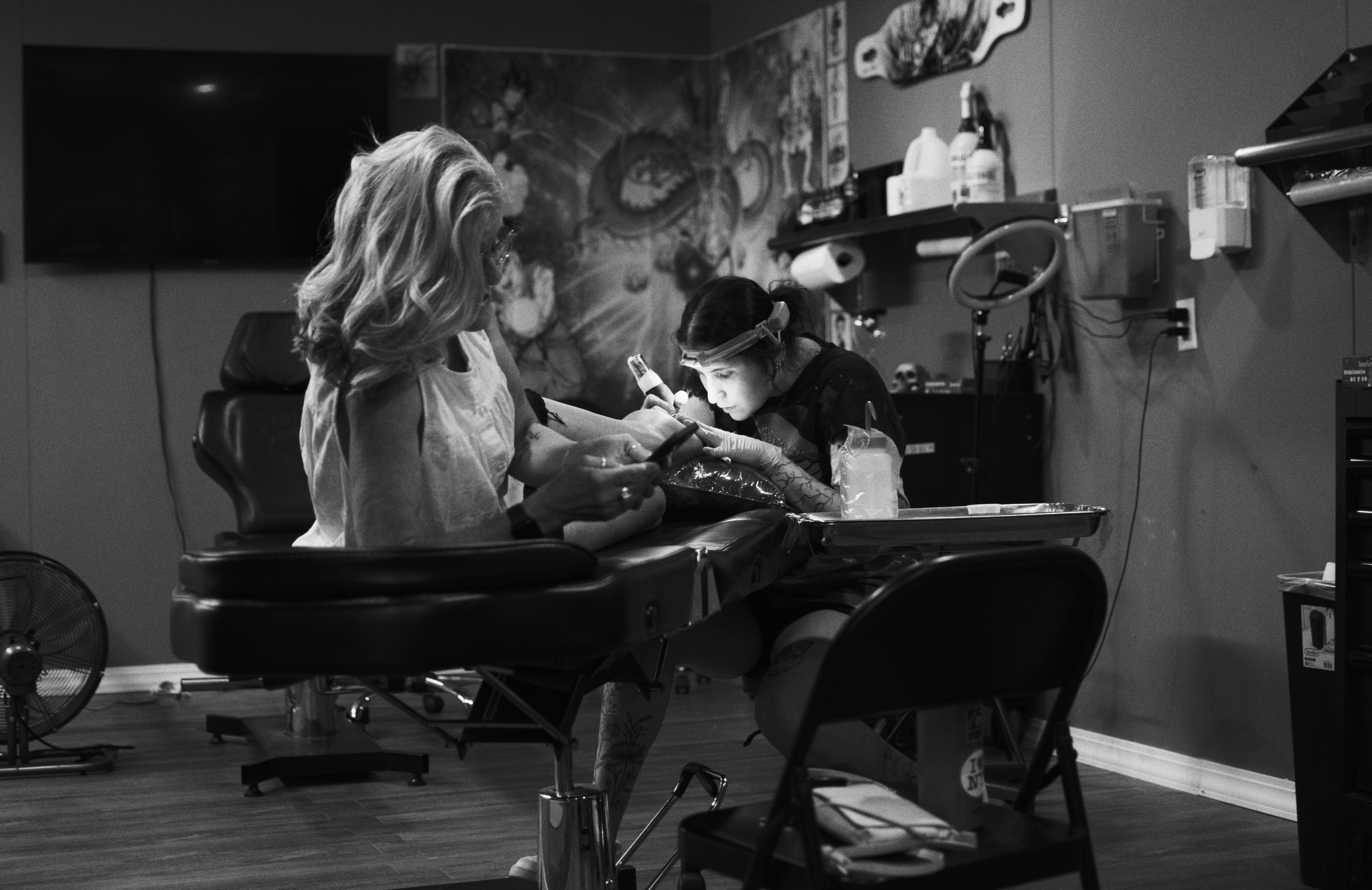
My friend Sierra never expected a routine checkup to turn her life upside down. But when she was unexpectedly diagnosed with a medical condition that could require major lifestyle changes — and possibly surgery — anxiety quickly became part of her daily life. Faced with uncertainty, she decided to tackle a few items on her personal bucket list. One of them was getting a new tattoo.
She already had a tattoo from years earlier, but over time she began to see it less as a piece of art and more as a mark — something that no longer held the meaning it once did. She wanted that to change.
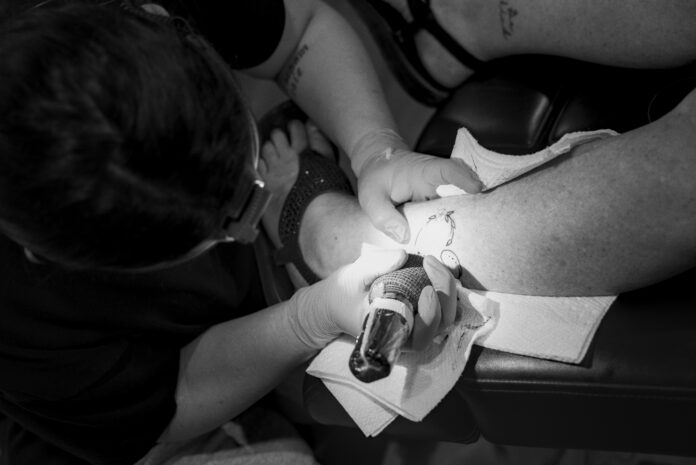
On the advice of a friend, Sierra chose to get a small tattoo on her lower leg. The experience was more than she expected — the design, the process, and even the sensation of the needle brought her a strange sense of calm. That one tattoo led to another. And another. In a short period of time, the pieces grew larger, more detailed, and more personal.
Sierra jokingly began referring to the process as “ink therapy” — a way of reclaiming her body, focusing her mind, and turning anxiety into art. For her, each session wasn’t just about the finished design, but about the peace she found in the chair and the control she felt over her own story.
For many, getting tattooed isn’t just an act of art — it’s an act of healing. The process of choosing a design, committing to it, and enduring the steady buzz of the machine can be deeply personal. Some people wear tattoos as living memorials to lost loved ones, using ink to keep memories close. Others see it as a way to reclaim their bodies after illness, abuse, or injury — turning scars and pain into something beautiful.
Even the physical sensation of tattooing can serve a purpose. The rhythmic needlework has a meditative quality for some, offering a rare kind of mindfulness. And while the pain is real, it can also be cathartic — a channel for releasing emotional weight in a controlled, purposeful way.
Mental health professionals are beginning to recognize this therapeutic side of tattooing, and many tattoo artists are aware of their role in helping clients work through personal milestones, grief, or recovery. It’s proof that for some, ink isn’t just decoration — it’s medicine.
PSYCHOLOGICAL ADVANTAGES OF GETTING A TATTOO
Self-Expression & Identity
Tattoos let you wear your story on your skin. They’re a way to declare who you are, what you value, or what you’ve been through. That sense of identity can boost your confidence and self-esteem.
Control & Empowerment
Getting tattooed is a deliberate act. For many, especially those who’ve faced trauma or loss, it’s a way to reclaim control over their body—turning something painful or unwanted into a symbol of strength or beauty.
Emotional Healing & Catharsis
The process can be therapeutic. Sitting through the pain and watching your story take shape can help you process grief, anxiety, or difficult emotions. It’s a physical outlet for emotional release.
Mindfulness & Focus
During tattooing, you’re forced into the moment—the sights, sounds, and sensations demand your attention. This can create a kind of mindfulness or meditation effect, which calms the mind and reduces stress.
Social Connection
Tattoos often come with stories shared with artists and others. This social interaction can create a sense of belonging and acceptance, helping fight feelings of isolation.
Boost in Self-Esteem & Body Image
Many report feeling better about their bodies after tattoos—transforming scars or imperfections into meaningful art can improve how you see yourself physically and emotionally.
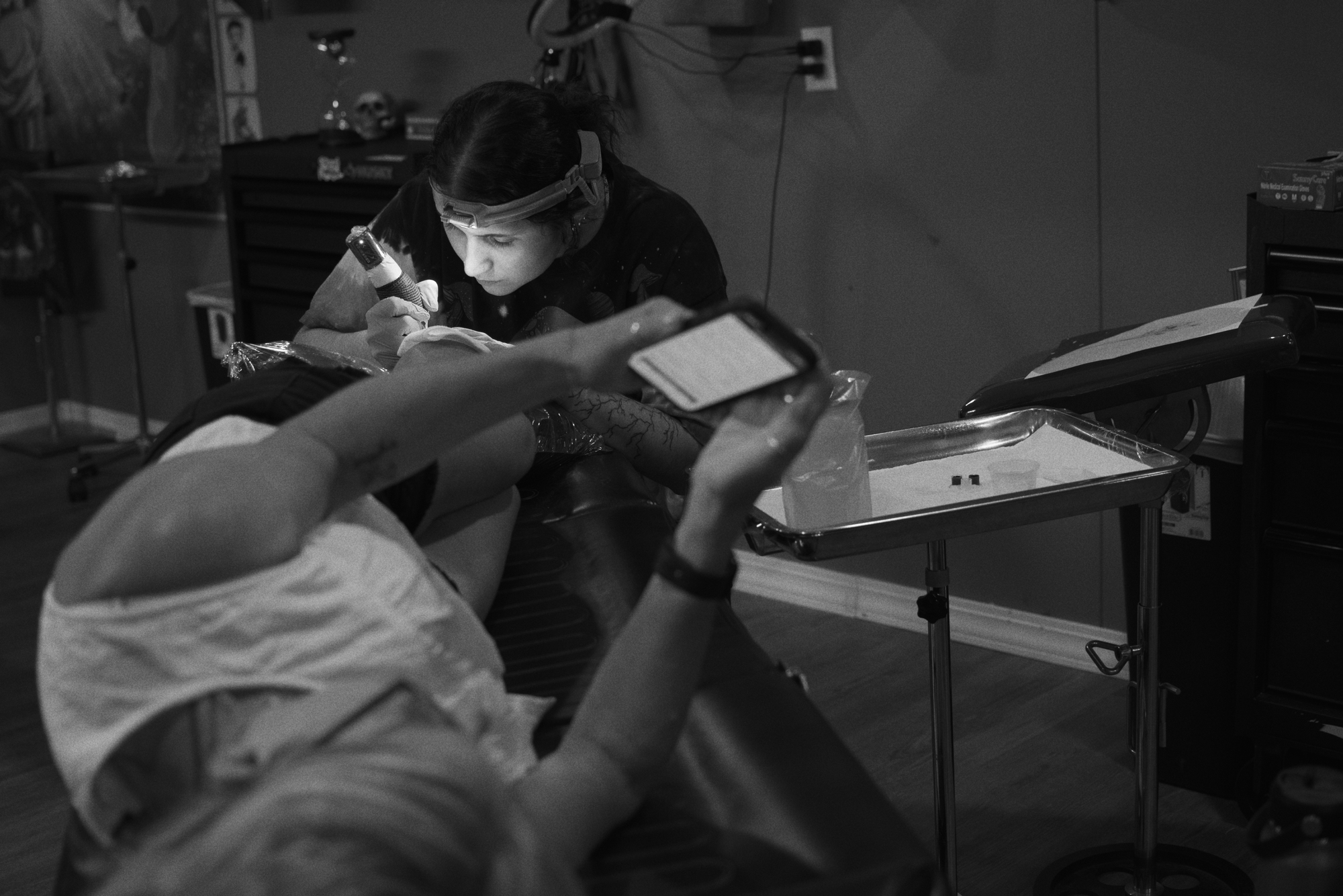
| RESURGENCE
Tattooing in the 21st century is booming. Nearly 40% of American adults have at least one tattoo, with younger generations pushing that figure even higher. Far from being a subculture, tattooing is now a mainstream form of self-expression. Tattoo conventions draw thousands. Social media has given artists global followings. Styles range from hyper-realistic portraits to minimalist symbols — each telling a story unique to the wearer.
For those who remember when tattoos were scandalous, the change can be startling. What was once a sign of rebellion is now a respected — even celebrated — art form. Whether you love them or not, tattoos have undeniably moved from the margins to the mainstream, offering not just beauty, but in some cases, deep personal healing.
INKED INTO THE WESTERN SPIRIT
Tattoos have come a long way from their old-school roots as marks of outlaws and sailors to becoming a celebrated form of personal expression—and even healing—in modern Western culture. They echo the rugged individualism that’s been part of the West’s backbone for generations: the willingness to wear your story openly, take control of your destiny, and find meaning in hardship.
In a landscape shaped by pioneers, cowboys, and tough survivors, tattoos are the new frontier—carved not into wood or stone, but into flesh and spirit. They are badges of experience, resilience, and identity, proving that the Western way isn’t just about the land—it’s about how you carry yourself through it.
So whether you’re marking a milestone, reclaiming your body, or simply honoring who you are, ink carries more than color. It carries legacy. And in the West, legacy is everything.
REFERENCES & MORE INFORMATION
- Why Are Tattoos Popular? – Byrdie
- The History of Tattoos in the West – Brainz Magazine
- History of Tattooing – Wikipedia
- 32% of Americans Have a Tattoo – Pew Research Center
- More Americans Have Tattoos and Are Accepting of Those Who Do – Vision Monday
- Americans Have Become More Favorable Toward Tattoos – YouGov
- Do Tattoos Hurt Your Job Chances? – People Magazine
- Tattoo as Therapy – Times of India
- Ink for the Soul: Mental Health Tattoos – Mental Health Wellness
- Effects of Tattooing on Anxiety and Self-Esteem – PMC
- Tattoos Can Heal and Improve Mental Health – BW Wellbeing
- Tattoos and Mental Health – MyWellness Pittsburgh